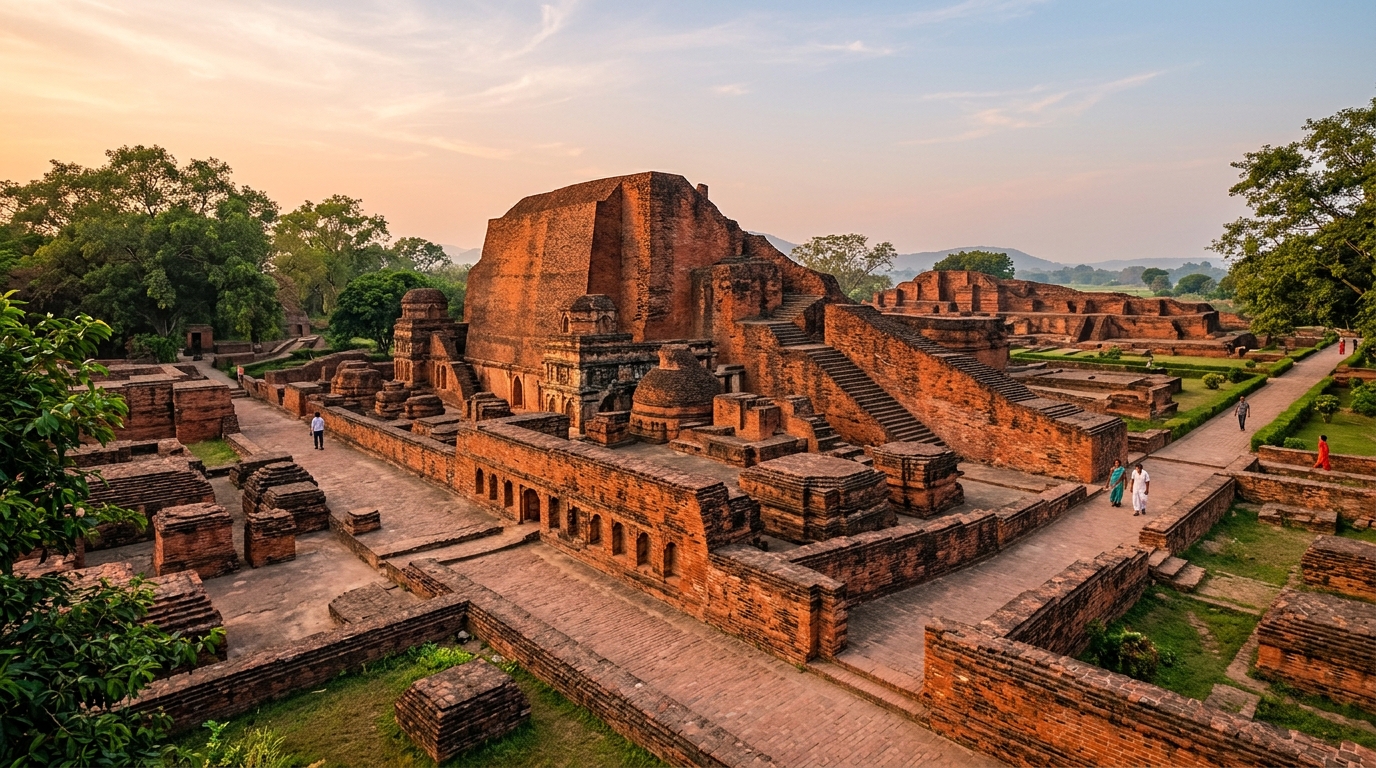
The name "Bihar" derives from the Sanskrit word Vihara, meaning Buddhist monastery. Few geographical regions on Earth have witnessed as much civilizational history: Bihar was the political core of the Maurya and Gupta Empires, the cradle where Buddhism and Jainism were born, and the home of ancient humanity's greatest residential universities.
For history enthusiasts and cultural travelers, Bihar offers an awe-inspiring pilgrimage into antiquity. Here is a curated guide to the most significant historical destinations across the state.
Top Historical Landmarks of Bihar
| Destination | Location | Era / Dynasty | Historical Significance |
|---|---|---|---|
| Mahabodhi Temple | Bodh Gaya | 3rd Century BCE (Ashoka) / 5th Century CE | UNESCO World Heritage site; location of Buddha's Enlightenment under the Bodhi Tree |
| Nalanda Mahavihara | Nalanda (near Rajgir) | 5th Century CE (Gupta Empire) | UNESCO World Heritage ruins of ancient world's foremost residential university |
| Rajgir (Rajgriha) | Nalanda District | 6th Century BCE (Haryanka / Magadha) | First capital of Magadha, Vulture Peak (Gridhrakuta), Hot Springs, Bimbisara Jail |
| Vaishali | Vaishali District | 6th Century BCE (Lichchhavi Republic) | World's earliest documented democratic republic; Ashoka Pillar with Lion capital |
| Vikramshila University | Antichak, Bhagalpur | 8th Century CE (Pala Empire) | Premier Tantric Buddhist university established by King Dharmapala |
| Tomb of Sher Shah Suri | Sasaram, Rohtas | 1545 CE (Sur Empire) | Indo-Islamic architectural marvel standing in the middle of an artificial lake |
1. Mahabodhi Temple, Bodh Gaya
Located on the banks of the Falgu (Niranjana) River, Bodh Gaya is the spiritual heart of the Buddhist world. Around 530 BCE, Siddhartha Gautama sat in deep meditation beneath a sacred fig tree (Ficus religiosa) and attained supreme Enlightenment, becoming the Buddha.
The 55-meter-high grand pyramidal brick temple, originally founded by Emperor Ashoka and embellished during the Gupta period, houses the Diamond Throne (Vajrasana) and a direct descendant of the original Bodhi Tree.
2. The Ancient Ruins of Nalanda
Founded under the Gupta emperor Kumaragupta I in the 5th century CE, Nalanda was an international seat of learning that hosted over 10,000 students and 2,000 faculty from across China, Korea, Japan, Tibet, and Persia. The excavated archaeological site reveals monumental brick stupas, sophisticated monastery dormitories with meditation niches, and interconnected water drainage channels.
3. Rajgir: The Mountain Fortress of Magadha
Nestled in a green valley encircled by five rugged hills, Rajgir was the original capital of the ancient Magadha Kingdom before Pataliputra. Key highlights include:
- Gridhrakuta (Vulture's Peak): Where the Buddha delivered pivotal sermons including the Heart Sutra and Lotus Sutra. Accessible by ropeway chairlift or ancient stone steps.
- Cyclopean Wall: A 40-kilometer-long prehistoric stone fortification wall constructed without mortar, dating back to pre-Mauryan times.
4. Vaishali: The World's First Republic
Long before democratic assemblies flourished in Athens, the Lichchhavi clan of Vaishali governed through an elected assembly of clan representatives. Vaishali is also the birthplace of Lord Mahavira, the 24th Tirthankara of Jainism, and where the Buddha preached his last sermon before his Mahaparinirvana.
Frequently Asked Questions
Conclusion
Bihar is a living open-air museum of world history. Exploring its tranquil monastic ruins and timeless stupas connects visitors directly with the minds, empires, and spiritual teachers that shaped human civilization.
Next in History & Travel: Famous Historical Places in Delhi · Nalanda University Complete Guide