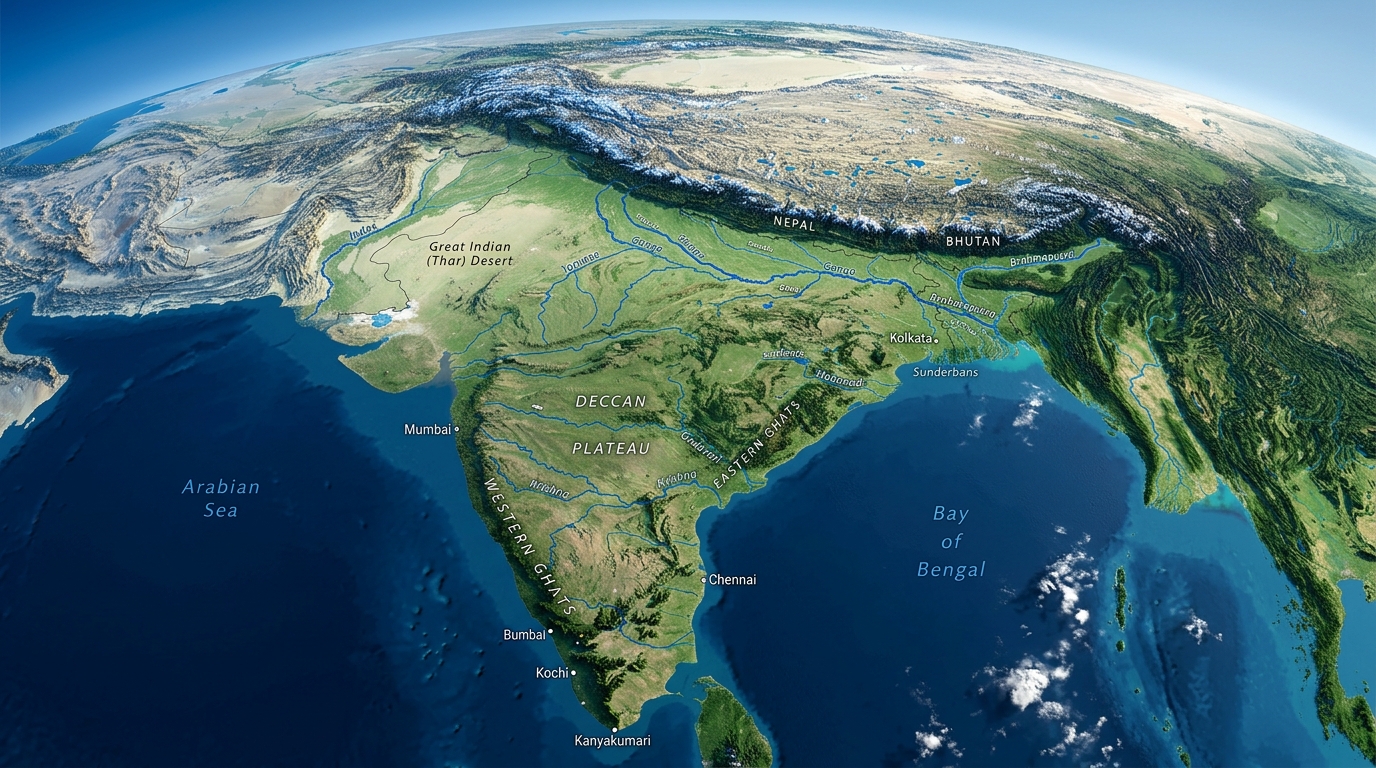
Whether you are preparing for government competitive examinations (UPSC, SSC CGL, State PSCs, Banking), university entrance tests, or college trivia quizzes, having a structured command over Indian general knowledge is essential.
Here is an authoritative compilation of 50 high-yield general knowledge facts about India categorized into Constitution & Polity, National Symbols, Geography Superlatives, History, and Science.
1. Constitution and Polity Facts
| Topic | Core Fact | Key Detail / Article |
|---|---|---|
| Longest Written Constitution | The Constitution of India is the world's lengthiest written constitution. | Originally had 395 articles in 22 parts and 8 schedules; today contains 448+ articles. |
| Drafting Committee Chairman | Dr. B.R. Ambedkar | Regarded as the "Father of the Indian Constitution." |
| Time Taken to Draft | 2 Years, 11 Months, and 18 Days | Adopted on November 26, 1949; came into effect on January 26, 1950 (Republic Day). |
| Preamble Philosophy | "Sovereign, Socialist, Secular, Democratic, Republic" | Words "Socialist", "Secular", and "Integrity" added via the 42nd Amendment Act (1976). |
| Calligrapher | Prem Behari Narain Raizada | Handwrote the original Constitution in flowing italic style without taking payment. |
2. Official National Symbols of India
- National Emblem: The Lion Capital of Ashoka from Sarnath, featuring four Asiatic lions standing back-to-back, with the motto "Satyameva Jayate" (Truth Alone Triumphs) taken from the Mundaka Upanishad in Devanagari script.
- National Flag (Tiranga): Designed by freedom fighter Pingali Venkayya; adopted on July 22, 1947. Width-to-length ratio is strictly 2:3.
- National Anthem: "Jana Gana Mana", composed in Sanskritized Bengali by Rabindranath Tagore; playing time is precisely 52 seconds.
- National Song: "Vande Mataram", composed in Sanskrit by Bankim Chandra Chattopadhyay in his 1882 novel Anandamath.
- National Aquatic Animal: The Ganges River Dolphin (Platanista gangetica), an endangered freshwater cetacean.
- National Heritage Animal: The Indian Elephant (declared in 2010 to boost conservation).
- National River: The Ganga (declared in November 2008).
3. Geographical Superlatives of India
| Category | Name / Record | Location / Measurement |
|---|---|---|
| Highest Mountain Peak | Kanchenjunga | 8,586 meters (Sikkim-Nepal border) |
| Longest River | Ganga | 2,525 km (originates at Gangotri Glacier) |
| Largest Freshwater Lake | Wular Lake | Jammu & Kashmir (fed by River Jhelum) |
| Largest Brackish Water Lagoon | Chilika Lake | Odisha (1,100 sq km winter surface area) |
| Highest Waterfall | Kunchikal Falls | 455 meters (Shimoga district, Karnataka) |
| Largest State by Area | Rajasthan | 342,239 square kilometers |
| Smallest State by Area | Goa | 3,702 square kilometers |
| Most Populous State | Uttar Pradesh | Over 240 million population |
4. Historic Firsts and Nobel Laureates
- First Indian Nobel Laureate: Rabindranath Tagore won the Nobel Prize in Literature in 1913 for his poetry collection Gitanjali, becoming the first non-European to win a Nobel.
- First Science Nobel in Asia: Sir C.V. Raman won the Nobel Prize in Physics in 1930 for the discovery of the Raman Effect (scattering of light), celebrated annually on February 28 as National Science Day.
- First President of India: Dr. Rajendra Prasad (served from 1950 to 1962).
- First Indian in Space: Wing Commander Rakesh Sharma flew aboard Soyuz T-11 on April 3, 1984. When Prime Minister Indira Gandhi asked how India looked from space, he famously answered: "Saare jahan se achha" (Better than the whole world).
- First Woman Prime Minister: Indira Gandhi (assumed office in January 1966).
- First Woman President: Pratibha Patil (served 2007–2012).
Frequently Asked Questions
Conclusion
Mastering these fundamental general knowledge facts provides a solid conceptual foundation for academic tests, competitive examinations, and cultural awareness. Review them regularly using active recall and spaced repetition to ensure long-term retention.
Browse Knowledge: 50 Interesting Facts About India · Indian States & Geography · History of Ancient India