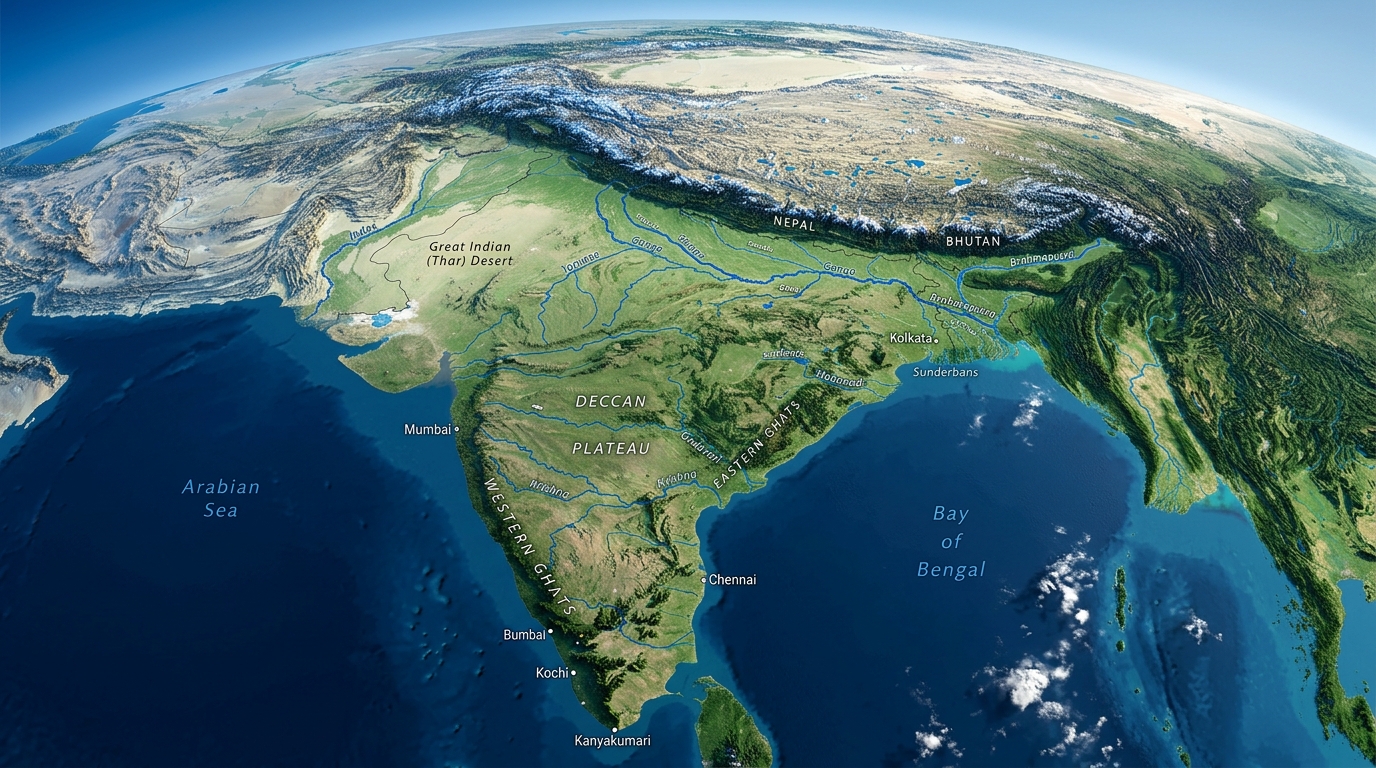
India is a land of astronomical contrasts, rich historical depth, and astonishing scientific milestones. Beyond well-known landmarks like the Taj Mahal or Bollywood, the subcontinent is home to bizarre natural phenomena, world-first inventions, and breathtaking feats of engineering.
Here are 50 verified, intriguing facts about India organized across science, geography, history, and culture that will change how you view this ancient yet hyper-modern nation.
Scientific & Mathematical Breakthroughs
- Invention of Zero: The mathematical concept and placeholder symbol for zero (Shunya) was formalized in India by mathematician Aryabhata and codified by Brahmagupta in 628 CE.
- Discovery of Water on the Moon: In 2008, India's Chandrayaan-1 lunar orbiter and its Moon Impact Probe detected conclusive spectroscopic evidence of hydroxyl and water molecules on the lunar surface.
- South Pole Lunar Landing: In August 2023, India's Chandrayaan-3 mission became the first spacecraft in human history to achieve a successful soft landing near the challenging South Pole of the Moon.
- Cataract and Plastic Surgery: Sushruta, an ancient Indian physician practicing in Varanasi around the 6th century BCE, is considered the "Father of Surgery." The Sushruta Samhita details rhinoplasty (nasal reconstruction) and extracapsular cataract extraction.
- First Mars Mission Success on First Attempt: ISRO’s Mars Orbiter Mission (Mangalyaan) in 2014 made India the first nation to reach Martian orbit on its maiden attempt—at a cost of $74 million, less than the Hollywood budget of the movie Gravity.
Geographical & Natural Marvels
| Fact | Location | Phenomenon |
|---|---|---|
| Wettest Place on Earth | Mawsynram, Meghalaya | Receives an average of 11,872 mm (467 inches) of annual rainfall due to funneling monsoon winds. |
| The Only Floating National Park | Keibul Lamjao, Loktak Lake, Manipur | World's only floating wildlife sanctuary, composed of floating decomposed biomass called Phumdis. |
| Gravity-Defying Magnetic Hill | Leh-Kargil Highway, Ladakh | An optical illusion created by the surrounding landscape slope that makes free-wheeling vehicles appear to roll uphill. |
| Meteorite Impact Crater Lake | Lonar Lake, Buldhana, Maharashtra | Formed by a hypervelocity meteorite impact 52,000 years ago; saline and alkaline ecosystem. |
| Living Root Bridges | Cherrapunji & Nongriat, Meghalaya | Intertwined aerial roots of rubber fig trees trained across rivers over generations to form durable bridges. |
Incredible Infrastructure & Postal Feats
- World's Highest Post Office: Located in Hikkim, Himachal Pradesh, at an altitude of 4,400 meters (14,400 feet) above sea level. It still delivers handwritten postcards across the world.
- Floating Post Office: In Srinagar, Kashmir, an operational post office floats on a traditional cedar houseboat on Dal Lake.
- Largest Postal Network: India Post operates over 155,000 post offices—more than twice the number of any other country on Earth.
- World's Highest Railway Arch Bridge: The Chenab Rail Bridge in Jammu & Kashmir arches 359 meters above the river bed—35 meters taller than the Eiffel Tower.
- Largest Cricket Stadium: The Narendra Modi Stadium in Ahmedabad, Gujarat, holds an astonishing seating capacity of 132,000 spectators.
Culture, Wildlife & Heritage
- The Only Country with Both Lions and Tigers: India is the only nation on Earth where wild tigers (Bengal Tiger) and wild lions (Asiatic Lion in Gir Forest, Gujarat) coexist naturally.
- Origin of Chess: Chess originated in northern India during the Gupta Empire around the 6th century CE, where it was known as Chaturanga (meaning "four divisions of the military": infantry, cavalry, elephantry, and chariotry).
- Snakes and Ladders Was a Moral Game: Known originally as Moksha Patam, the board game was designed to teach children virtues (ladders) and vices (snakes) on their journey toward liberation.
- Kumbh Mela Visible from Space: The Maha Kumbh Mela pilgrimage at Prayagraj gathers over 100 million people, making the crowd density clearly identifiable from satellite orbit.
- Over 19,500 Mother Tongues: According to census linguistic surveys, India has over 19,500 dialects and languages spoken across its communities, with 22 officially recognized in the Eighth Schedule of the Constitution.
Frequently Asked Questions
Conclusion
From pioneering orbital space science at a fraction of global costs to preserving ancient living ecosystems, India’s sheer depth of human endeavor continues to fascinate and inspire observers worldwide.
Next in India & GK: 50 Important General Knowledge Facts About India · Indian States & Geography